Listen to the carol:
This is my own recording of Silent Night via my Catholic project, Cassia & Myrrh. You can receive a free Gregorian chant catalogue by visiting here.
Silent night, holy night,
All is calm, all is bright…
Few Christmas carols are as widely known or as universally loved as Silent Night. Since it was first sung on Christmas Eve in 1818, the hymn has been translated into hundreds of languages and has become a cherished part of Christmas celebrations throughout the world.
Its appeal lies partly in its simplicity. The melody is gentle and easily remembered, while the text draws our attention to the quiet wonder of Christ’s birth. Rather than describing every detail of the Nativity, the carol lingers over a single scene: the Christ Child resting peacefully in the arms of His mother as the world receives its Savior.
For many people, Silent Night has become almost synonymous with Christmas itself. It is sung in churches, at candlelight services, in homes, schools, and public celebrations across cultures and denominations. Few hymns have crossed so many languages and traditions while remaining so immediately recognizable.
Yet behind its familiar melody lies a remarkable story.
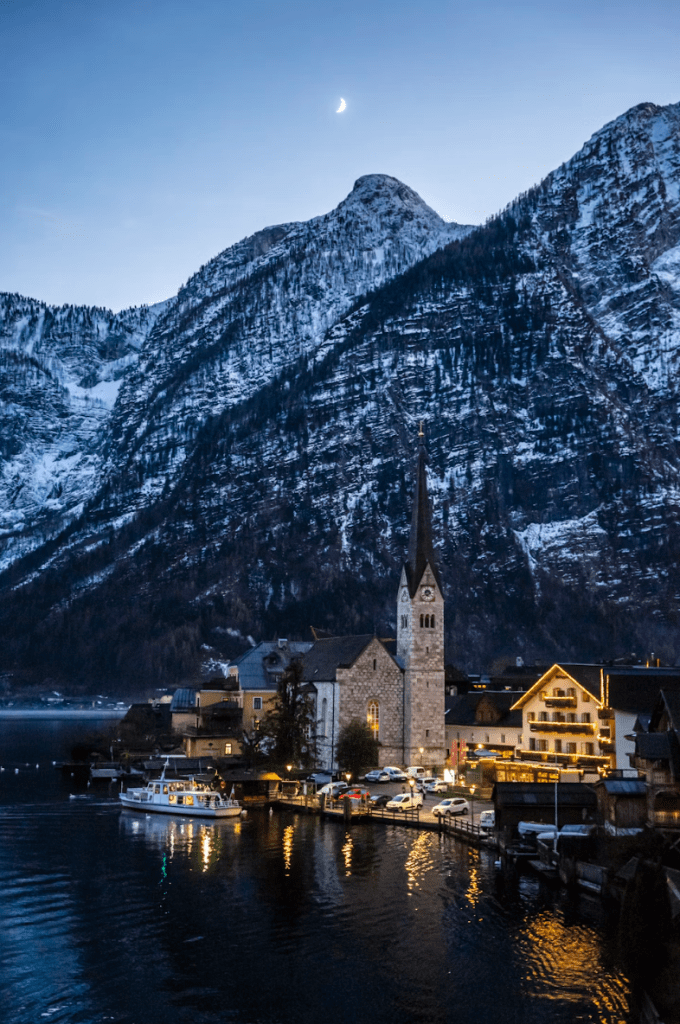
Silent Night was not written in a great cathedral or by a famous composer. It began in the small Austrian village of Oberndorf, where a young priest, Joseph Mohr, wrote the poem that would become the hymn. He later asked the local schoolteacher and organist, Franz Xaver Gruber, to compose a melody for Christmas Eve. Neither man could have imagined that their simple collaboration would give the world one of its most enduring Christmas songs.
The hymn’s lasting influence comes not only from its beautiful melody but also from the peace it expresses. The Gospel accounts of Christ’s birth speak of angels announcing “peace on earth” (Luke 2:14), and Silent Night has long been associated with that promise. It reminds us that the coming of Christ was not merely the birth of a child, but the arrival of the Prince of Peace foretold by the prophets (Isaiah 9:6).
More than two centuries later, Silent Night continues to bring Christians back to the heart of the Nativity. Its quiet simplicity has allowed generation after generation to contemplate the mystery of Christmas and the hope that entered the world through the birth of Jesus Christ.
Whether you have come looking for the lyrics, the history of the hymn, its meaning, or the remarkable story of how it came to be written, this guide explores one of the most influential Christmas carols ever composed.
Today, Silent Night has been translated into more than 300 languages and dialects, making it one of the most widely translated Christmas carols ever written. Its simple melody and universal message have allowed Christians across cultures to make it their own while preserving the hymn’s central focus on the birth of Christ.
The Meaning of Silent Night
At first glance, Silent Night seems almost disarmingly simple.
Unlike some Christmas carols that recount the journey to Bethlehem or the visit of the shepherds and wise men, Silent Night remains almost entirely focused on the Christ Child Himself. The hymn invites us into the stillness of the Nativity, contemplating the mystery of the Incarnation rather than attempting to tell the entire story.
The opening lines present a scene of remarkable peace:
Silent night, holy night,
All is calm, all is bright…
That image has become inseparable from Christmas, even though the Gospel accounts do not describe the night in quite those terms. The Evangelists tell us that Mary gave birth to Jesus in Bethlehem, that shepherds came in response to the angels’ message, and that the heavenly host proclaimed “Glory to God in the highest, and on earth peace among those with whom he is pleased” (Luke 2:8–14).
The hymn reflects on that promise of peace rather than attempting to describe every historical detail. Its quiet, contemplative character has helped make it one of the Church’s most enduring Christmas hymns.
As the verses continue, they proclaim the identity of the newborn Child.
Jesus is presented not simply as an infant lying in a manger, but as the Savior promised throughout Scripture. The hymn celebrates the mystery at the heart of Christmas: that God has entered human history in the person of Jesus Christ to bring salvation to the world.
This theme echoes many of the familiar biblical prophecies associated with Christmas, including Isaiah’s promise that:
“For to us a child is born, to us a son is given… and his name shall be called Wonderful Counselor, Mighty God, Everlasting Father, Prince of Peace.” (Isaiah 9:6)
It also reflects the opening chapter of the Gospel of John, which speaks of Christ as the eternal Word who “became flesh and dwelt among us” (John 1:14).
These biblical themes help explain why Silent Night has remained so beloved for more than two hundred years. Rather than focusing on dramatic events or elaborate imagery, it quietly invites Christians to contemplate the central mystery of the Nativity: that in the birth of Jesus Christ, God came to dwell among His people.
Its simplicity is one of its greatest strengths. The hymn leaves space for reflection, allowing the familiar words and melody to draw our attention back to the wonder of Christmas itself.
The True Story Behind Silent Night
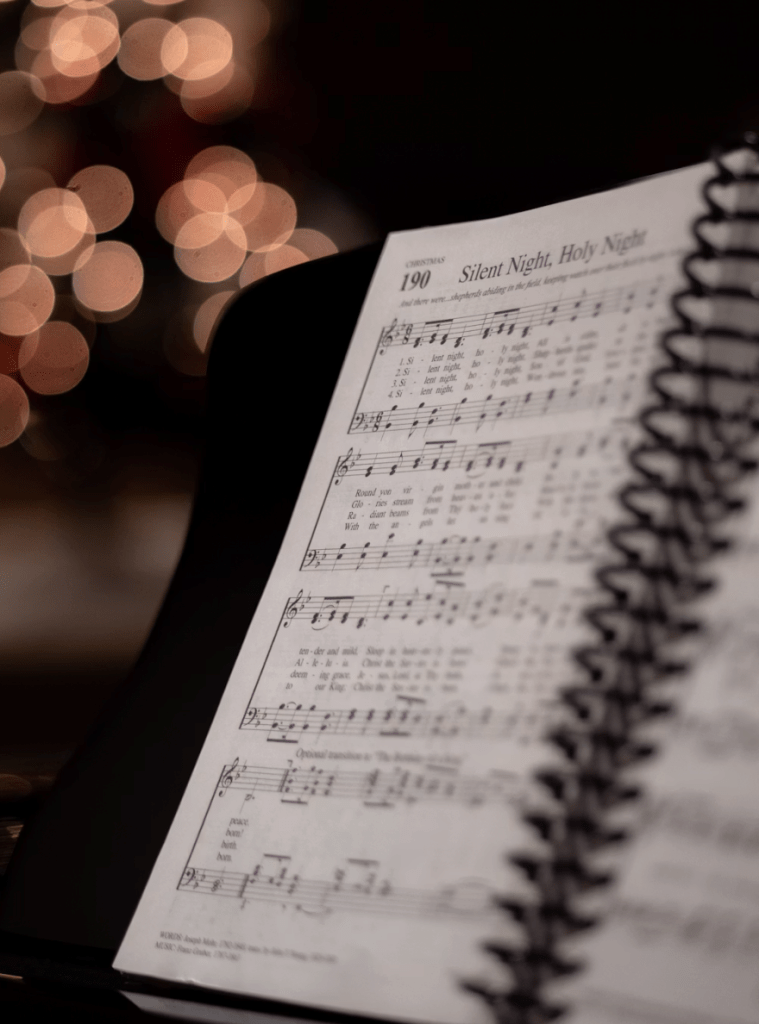
The story behind Silent Night is almost as well known as the hymn itself.
The words were written by Joseph Mohr, a young Austrian priest, who composed the poem in 1816. Two years later, as Christmas Eve approached in the village of Oberndorf near Salzburg, he brought the text to the local schoolteacher and organist, Franz Xaver Gruber, asking if it could be set to music in time for the Christmas Mass.
Gruber composed a simple melody that could be accompanied by guitar, and together the two men presented the hymn for the first time on December 24, 1818, at St. Nicholas Church in Oberndorf.
Over the years, a popular story developed that the church organ had broken just before Christmas, forcing the hymn to be written for guitar instead. While that account is often repeated, historians have found no contemporary evidence proving that a broken organ was the reason for the new composition. The organ may have needed repair, or the guitar may simply have been a practical choice. Whatever the case, the first performance was accompanied by guitar rather than the church organ.
What is certain is that neither Mohr nor Gruber expected their hymn to travel far beyond their small Alpine parish.
Instead, it gradually spread throughout the Austrian Tyrol, where travelling families of folk singers included it in their performances across Europe. By the middle of the nineteenth century, Silent Night was being sung far beyond Austria, and before long it had been translated into many different languages.
Today it has been translated into hundreds of languages and dialects, making it one of the most widely sung Christmas carols in history.
| Fact | Answer |
|---|---|
| Original title | Stille Nacht, heilige Nacht |
| Words by | Joseph Mohr |
| Music by | Franz Xaver Gruber |
| First performed | Christmas Eve, 1818 |
| First location | Oberndorf, Austria |
| Original accompaniment | Guitar |
| Original language | German |
A Brief Timeline
| Year | Event |
|---|---|
| 1816 | Joseph Mohr writes the poem that would become Silent Night. |
| 1818 | Franz Xaver Gruber composes the melody, and the hymn is first performed on Christmas Eve in Oberndorf, Austria. |
| 1830s–1840s | Travelling Tyrolean singers help introduce the hymn throughout Europe. |
| Mid-1800s | English translations begin appearing, and the carol spreads throughout the English-speaking world. |
| 1914 | Silent Night becomes closely associated with the Christmas Truce during the First World War, when soldiers on opposing sides reportedly sang the familiar hymn across the trenches. |
| 2011 | UNESCO recognizes Silent Night as part of Austria’s Intangible Cultural Heritage. |
Few Christmas hymns have such a well-documented history or such an extraordinary journey. What began as a simple parish hymn in a small Austrian village has become one of the defining songs of Christmas, sung each year by millions of people around the world.
In 2011, Silent Night was recognized by UNESCO as part of Austria’s Intangible Cultural Heritage.
Why Silent Night Became One of the World’s Most Beloved Christmas Carols
Thousands of Christmas songs have been written over the centuries, yet very few have become part of the shared traditions of Christians around the world. Silent Night is one of those rare exceptions.
Part of its enduring appeal is its simplicity.
The melody is gentle enough to be sung by a congregation, a choir, or a single voice. It doesn’t demand virtuosity, and yet it remains unmistakably beautiful. Even people who know only a handful of Christmas carols almost always recognize its opening phrase.
The text is equally accessible. Rather than exploring complex theology or recounting every detail of the Nativity, it invites listeners into a single moment of quiet contemplation. The focus remains on the Christ Child, the peace of that holy night, and the hope His birth brought into the world.
That simplicity has allowed the hymn to cross remarkable boundaries. It has been translated into hundreds of languages and is sung by Christians from many different traditions, including Catholics, Orthodox, Anglicans, Lutherans, and Protestants throughout the world.
Its message has also resonated far beyond the walls of the church.
One of the most moving moments in the hymn’s history came during the Christmas Truce of 1914. Along parts of the Western Front during the First World War, British and German soldiers laid down their weapons on Christmas Eve. In several places, men who had been enemies only hours before recognized one another through familiar Christmas hymns, including Silent Night—known to German soldiers as Stille Nacht. Although the events varied from one section of the front to another, the story has become one of the most powerful reminders of the hymn’s association with peace and reconciliation.
This connection is especially fitting because peace lies at the heart of the Christmas story itself. The angels proclaimed peace at Christ’s birth (Luke 2:14), and the prophet Isaiah foretold the coming of the Messiah as the Prince of Peace (Isaiah 9:6).
For more than two centuries, Silent Night has continued to give musical expression to that hope. Whether sung in a village church, a cathedral, around a family table, or by candlelight on Christmas Eve, it reminds Christians of the peace that entered the world through the birth of Jesus Christ.
That enduring message—expressed with extraordinary simplicity—is one reason Silent Night remains one of the most beloved Christmas carols ever written.
Frequently Asked Questions
Who wrote Silent Night?
The words of Silent Night were written by the Austrian priest Joseph Mohr in 1816. Two years later, he asked the teacher and organist Franz Xaver Gruber to compose a melody for the poem. Together they introduced the hymn at the Christmas Eve Mass in Oberndorf, Austria, on December 24, 1818.
Was Silent Night really written because the church organ was broken?
Perhaps—but historians cannot say for certain.
The story of a broken organ has become one of the best-known parts of the hymn’s history, but there is no contemporary evidence proving that it was the reason the carol was composed for guitar. It remains possible, but it should be treated as a tradition rather than an established historical fact.
Is Silent Night based on the Bible?
Yes. Although the hymn is not a direct retelling of the Nativity, it reflects the Gospel accounts of Christ’s birth and themes found throughout Scripture.
Some of the principal biblical passages associated with the hymn include:
- Luke 2:1–20 — The birth of Jesus and the announcement to the shepherds.
- Matthew 1:18–25 — The birth of Christ and the name Emmanuel.
- Isaiah 9:6 — The promised Messiah, the Prince of Peace.
- John 1:1–14 — The Word became flesh and dwelt among us.
What is the original title of Silent Night?
The hymn was originally written in German as Stille Nacht, heilige Nacht (“Silent Night, Holy Night”).
It first appeared in that language before being translated into English and eventually into hundreds of other languages around the world.
Why is Silent Night sung on Christmas Eve?
For many Christians, Silent Night has become closely associated with Christmas Eve because it was first performed on Christmas Eve in 1818 and reflects the peace and wonder of Christ’s birth.
It is especially common at candlelight services, where it is often sung near the conclusion of the liturgy as the congregation reflects on the mystery of the Incarnation.
Why is Silent Night often sung at candlelight services?
Silent Night has become closely associated with candlelight Christmas Eve services because of its peaceful melody and reflective character. In many churches, the congregation lights candles near the end of the service while singing the hymn together, symbolizing Christ as the Light of the World entering the darkness (John 8:12).
Although this tradition developed long after the hymn was first written in 1818, it has become one of the most recognizable Christmas customs in many parts of the world. The quiet simplicity of Silent Night makes it a fitting conclusion to Christmas Eve worship as Christians prepare to celebrate the birth of Jesus Christ.
Further Reading:
If you enjoyed learning about Silent Night, you may also enjoy:

