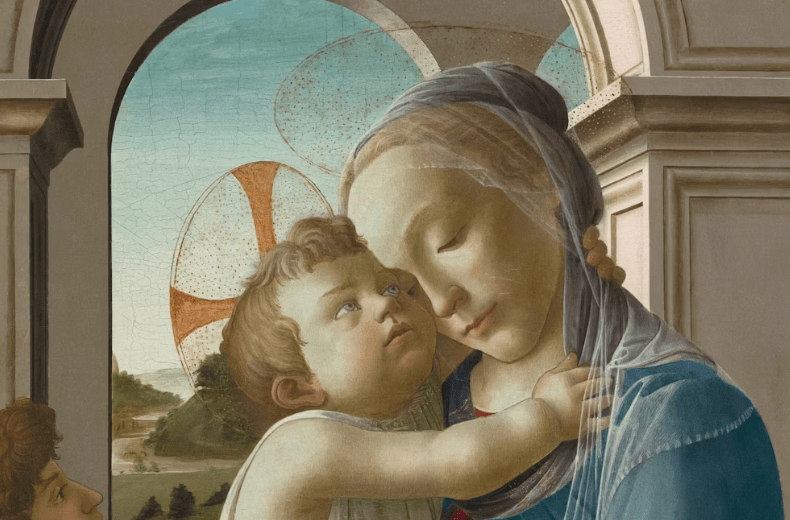
Latin Text, English Translation, and Meaning
If you’ve heard almost any sacred music at all, you’ve heard some version of the Ave Maria. It’s one of the most recognizable prayers in the Christian world, dating back to the earliest years of the Church and rooted in the greeting of the angel to Mary as he announced that she, though a virgin, would become Mother of the Savior of the world.
This Gregorian chant version, carrying the ancient sound of the monastic tradition, follows the traditional Latin prayer drawn from Scripture and developed in the life of the Church.
You can listen to the chant here:
(This is my version of the Gregorian chant Ave Maria, and you can find my free full Gregorian chant album with PDF guide at the end of this article.)
Latin Text
Ave Maria, gratia plena,
Dominus tecum.
Benedicta tu in mulieribus,
et benedictus fructus ventris tui, Iesus.
Sancta Maria, Mater Dei,
ora pro nobis peccatoribus,
nunc et in hora mortis nostrae.
Amen.
English Translation
Hail Mary, full of grace,
the Lord is with thee.
Blessed art thou among women,
and blessed is the fruit of thy womb, Jesus.
Holy Mary, Mother of God,
pray for us sinners,
now and at the hour of our death.
Amen.
Meaning and Context
As mentioned above, the first half of the prayer comes directly from the Gospel of Luke—Gabriel’s famous greeting at the Annunciation, and then Elizabeth’s remarkable words when Mary visits her. The second half developed later, as a natural response to the reality expressed in the first: if she is truly full of grace as she is addressed by an agent of Heaven, then asking for her prayers is not an inappropriate stretch by any mean, but an obedient, wise continuation.
In chant form, the Ave Maria slows everything down, speaking directly to the heart and spirit. The words are not rushed, but unfold in the context of gentle, haunting music, inviting the soul into a place of peace and meditation.
The prayer as well as this chant version of it is often used devotionally—outside of Mass, in the Rosary, in moments of quiet, personal prayer. But the text in both Latin and English also appears in countless musical settings, from simple chant to more elaborate compositions.
What’s striking is how grounded the prayer is, despite its profound spiritual meaning and power. There’s nothing abstract here: it’s addressed to a real person, at a real moment in salvation history, and it ends with something very human: pray for us now, and at the hour of our death.
That line expresses the core of what makes the Christian faith endure: its recognition of our need in this exact moment as well as at the cusp of eternity, to which we strive to orient our entire lives.
 Catholic Kind: Catholic Music & Culture Resource